
Wind and hail put more doors out of their tracks here than anything else, and the ones they don't, tired rollers do. If your door is hanging crooked or jammed part-way, pull the opener's plug and stay out from under it. It's braced, rehung and tested, and the estimate is free.
Tell us what the door is doing. The estimate is free either way.
A hailstorm that dents the sections of a steel door does more than mark it. Dents near the hinges bend the edges of the sections so they no longer line up, and a door with misaligned sections binds as it rolls through the curve at the top. Binding pushes the rollers sideways, and sooner or later one leaves the track. Many doors that come out of their tracks here have loose brackets and tired rollers first, which a regular garage door tune-up finds in time.
A rehang after hail includes looking at every section for creases at the hinge lines. Sections that are only dented can stay; sections creased where they fold are the ones that keep throwing rollers, and they're listed separately. A single creased section can often be replaced by itself when the door model is still made.
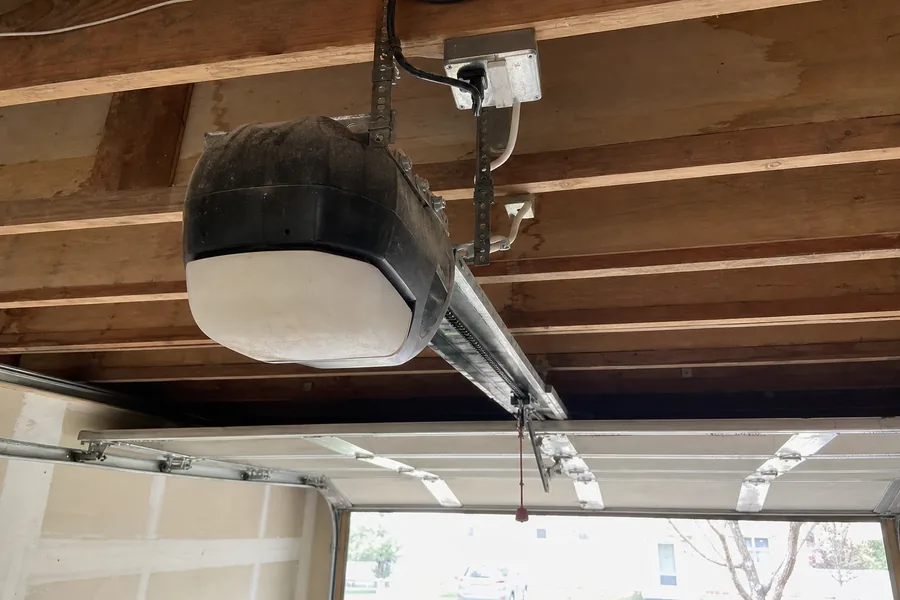
Unplug the opener, or flip its breaker if the cord is out of reach. Then leave the door where it stopped: don't push it, lift it or pull the release. It's heavy and only partly held, and it can shift.
If you need the car out for an early shift and it's trapped, or the door is jammed open for the night, tell us when you call. Both move the call forward.
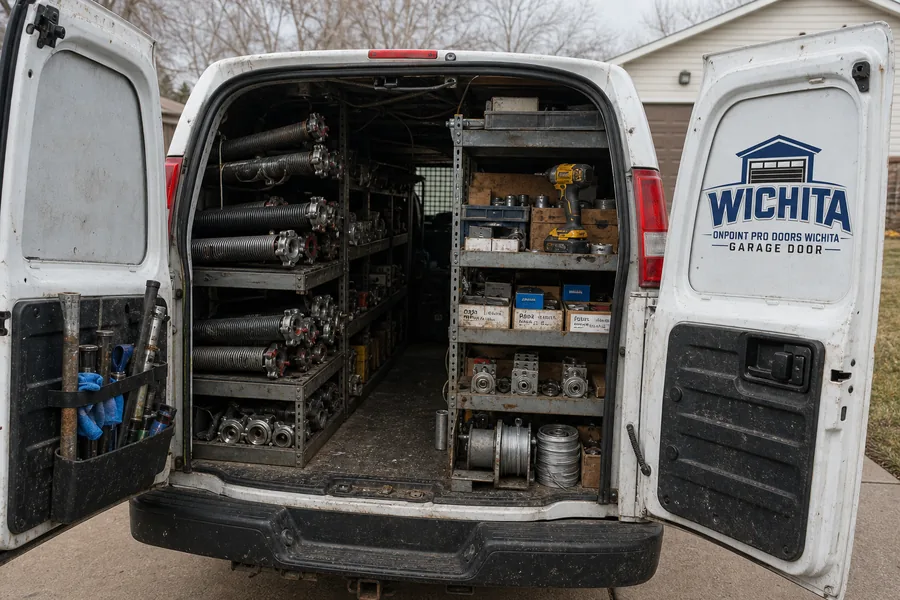
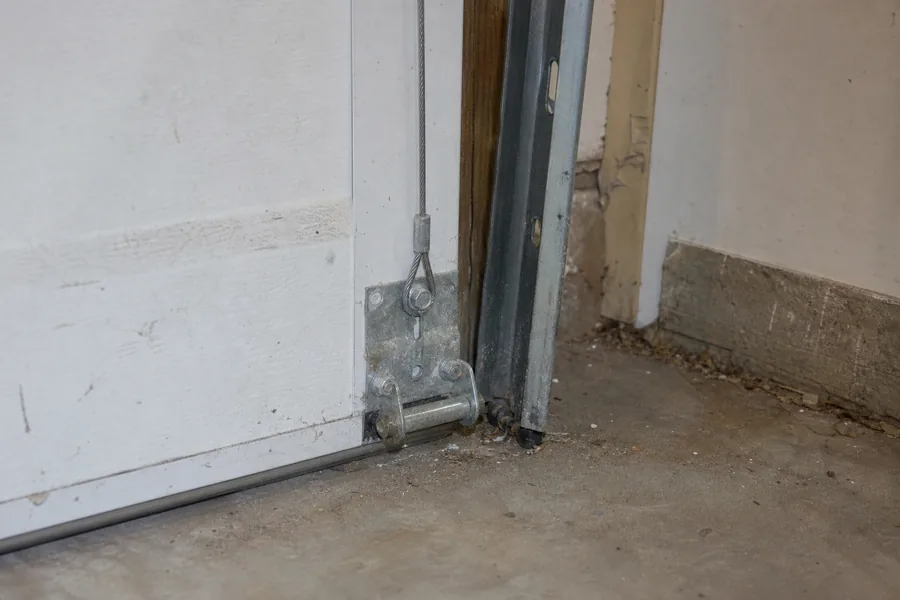
In the same order every time.
The three-car doors on the newer builds out west can be very wide, and a wide door flexes. In a strong gust the middle of the door bows inward; when the gust passes, the rollers at the middle sections may not settle back into the track. A door that comes out after a windy night, with no dent on it, usually went this way. The wider the door and the more open the ground in front of it, the more often it happens.
Horizontal struts across the upper sections keep a wide door flat when the wind leans on it. They're added during the rehang when the door is wide enough to need them, and noted on the estimate with the reason.
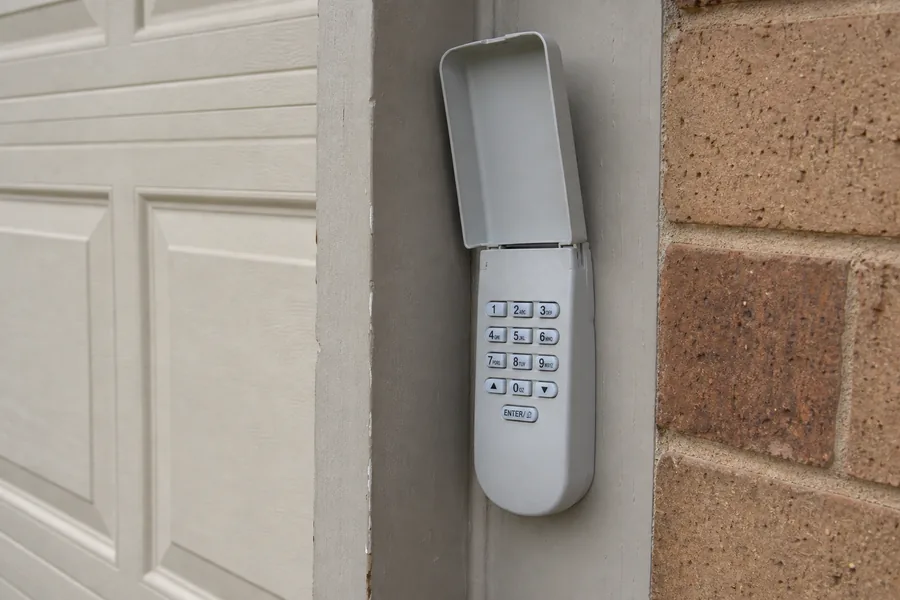
The single doors on the 1950s ranches often run on original track screwed into jambs that have dried and split over the decades. The screws loosen, the track leans further from the door with every season, and eventually a roller slips out on the loose side. Worn steel rollers make it happen sooner.
Rehanging those doors includes new fasteners into solid wood, or new jamb blocking where the old wood won't hold, and usually a new set of rollers.
If a storm has hit the house, take a look at the garage door from inside before running the opener. Look for a bowed section, rollers sitting at the edge of the track, or a gap where the door meets the floor on one side. Any of those means the door may jam or come out when it moves.
If you see one, leave the opener off and call. A door that was never forced is much easier to rehang than one that was run until it jammed.
The east-side ranches in Riverside, College Hill and Crown Heights, larger homes in Eastborough and around Westlink, older blocks in Delano, and Derby, Andover, Haysville, Maize, Goddard and Park City.
Say where you are and what's trapped; the window follows from that.
The rehang. Door secured, rollers back in, tracks aligned.
Creased sections. Only the ones that keep throwing rollers.
Struts. On wide doors that flex in the wind.
Rollers and fasteners. Where they're worn or loose.
Jamb blocking. New wood where the old jamb won't hold a screw.
Leave it closed if it is, unplug the opener, and call. The door is supported, checked for creases and rehung, with struts added if it needs them.
Dents near the hinge lines make sections bind. Creased sections are the ones to replace; dents elsewhere can often stay.
On wide doors, yes. They keep the door flat when the wind leans on it.
Not while it's out of the track. It's heavy and can shift.
Usually a track working loose in an old jamb, or worn rollers. Both are fixed on the rehang.
Wind flexed it, or hail creased a section near a hinge, and the first run afterward finished the job. Looking at the door before running it after a storm catches most of these.
Yes, sectional doors on shops and small warehouses.
Tell us when the car has to be out; early slots go to trapped cars first.
Free, and in writing before the door is touched.
Say how the door is hanging and what's stuck behind it, and you get a two-hour window; trapped cars and open garages come first.
Free estimate in the city and the suburbs around it.
Describe the symptoms and you'll get an arrival window, not a guess. The visit and the estimate is free, anywhere in Sedgwick County.
Would rather call? Call (316) 749-2780.
Tell us what the door is doing. The estimate is free either way.