
A door that starts down, stops and climbs back up, with a light flashing on the opener, is almost always the two safety eyes at the bottom of the track. On the plains the usual culprits are dust on a lens, a bracket nudged by a trash cart, or a wire the wind has been working loose. The estimate is free.
Tell us what the door is doing. The estimate is free either way.
Every garage door opener made for American homes since the early nineties comes with two photo eyes mounted low beside the door, one on each track. One eye projects an invisible beam, the other waits to receive it, and if anything interrupts that beam while the door is closing, the opener reverses. It's the feature that keeps a heavy door from coming down on a child, a dog or a car hood.
So when the door refuses to close and a light blinks, the opener is usually working exactly as designed. It believes something is in the way. The job is finding out why the two eyes have lost sight of each other, and on most houses that is a short visit rather than a new opener.
Wide west-side doubles carry their eyes a long way apart, and a small bump to either bracket is enough to break the line.
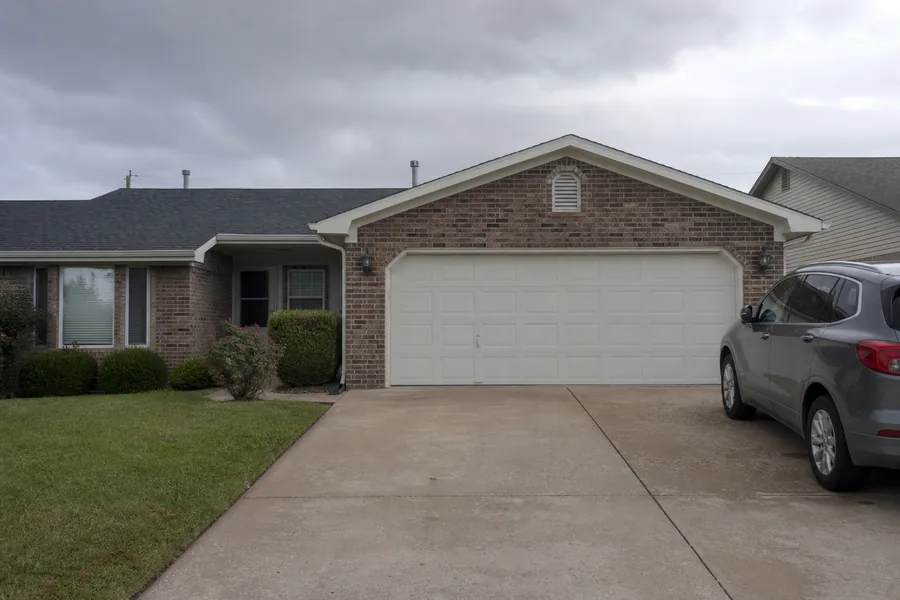
Nothing here needs doing on your end. Tell us which lights you see and whether they flicker, and the technician brings the matching parts.
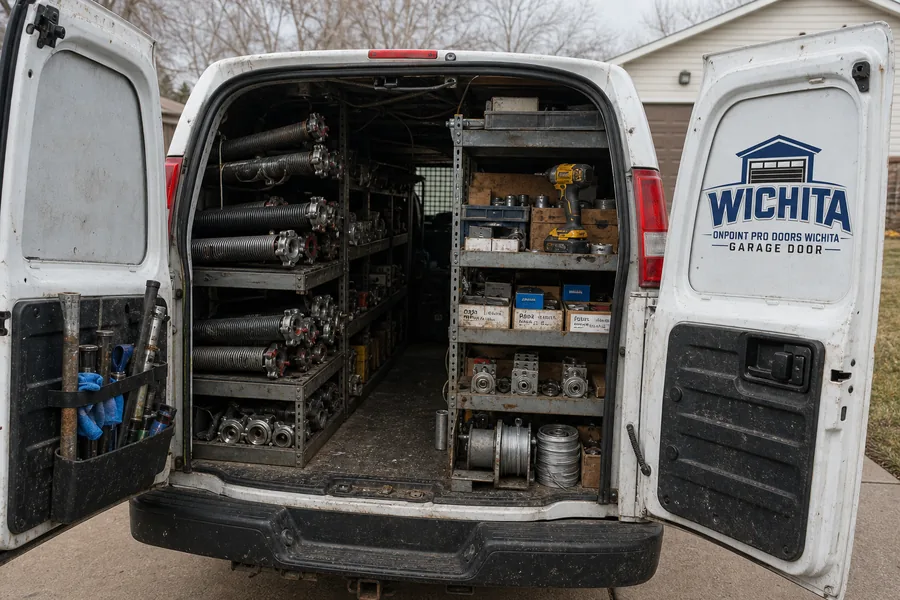
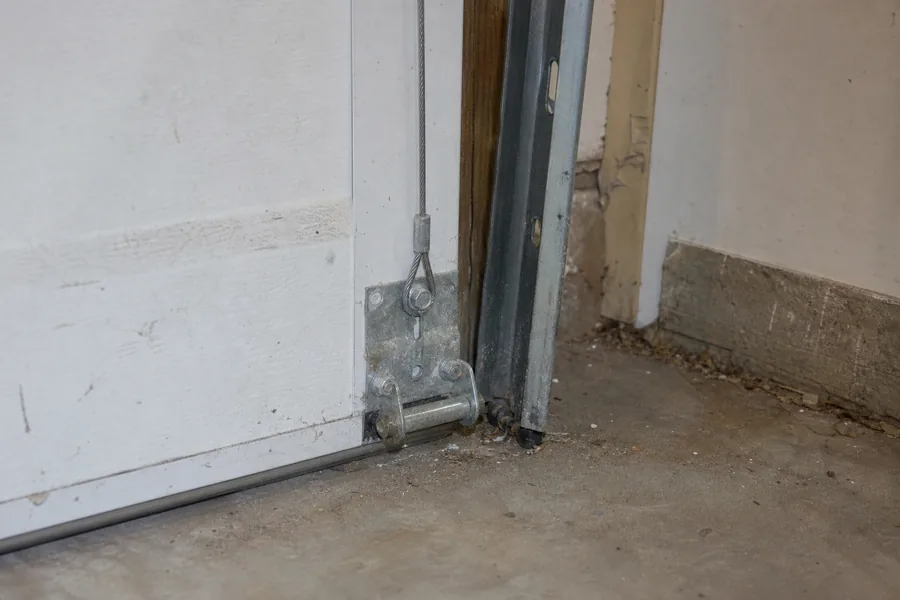
This is the list the technician works through on arrival, starting with the most common cause.
Plenty of people here leave for a plant shift or the base while it is still dark, and a garage that won't close at that hour means leaving the house open or staying home. Say so when you call. A door stuck open moves up the schedule, and the technician comes with the eyes that match your opener.
Please don't tape the eyes to each other or prop them on a shelf to get the door down. That fools the opener into closing blind and takes away the only protection between a moving door and anyone under it.
Steady lights and nothing in the way, yet the door still bounces back? Then the opener is reacting to something besides the beam. A door that turns around right at the concrete usually has its down limit set a little too far. One that reverses midway, especially if it feels heavy, often has a weak spring pushing the opener past its force setting.
Ice storms bring their own version. A bottom seal frozen to the slab, or a door stiff with cold, trips the force limit and the opener gives up. The fix is in the door, not the eyes, and the technician checks both on the same visit.
Eyes wear out like anything else near an open door: moisture gets behind a lens, a mower or a car clips one, or the little circuit board inside quits. Replacement pairs for LiftMaster, Chamberlain, Genie and the other common openers ride on the truck. They are sold as matched pairs and generally don't mix between brands, so the pair is matched to your opener.
If the wire itself is damaged, it is replaced along its run and fastened with proper clips instead of staples, which is what keeps the fault from coming back.
Height matters as well. Both eyes should sit at the same level, a few inches off the floor and square to each other. A bracket that has been bent and straightened a few times never holds, so it is swapped rather than coaxed back into place.
The sequence never changes: path, lenses, alignment, then the wiring back to the opener. A failing eye is swapped as a pair. Before leaving, the technician disconnects the opener and raises the door by hand. A door that keeps reversing often has a balance problem sitting underneath the sensor complaint.
Most sensor visits are quick. The longer ones involve doors that have been out of balance for a long time, and you hear about that before anything extra happens.
"The opener must be shot." Rarely. An opener that refuses to close because it thinks something is in the way is doing its job. Sort out what the eyes see and it closes normally.
"Just disconnect the sensors." That is how doors land on people and cars. Working eyes are a short visit, and we won't leave a door running without them.
"New sensors mean a new opener." No. A replacement pair connects to the opener already on your ceiling.
Usually neither. The dark one tends to be the receiver, and it goes dark whenever it loses sight of the sender. Alignment, a grimy lens or something in the way gets ruled out first, and the eyes are replaced only if they test bad.
That still points at the eyes. Many openers let the wall control force the door down even when the beam is blocked, so a door that only closes from the wall has a sensor fault. A remote that does nothing whatsoever is a separate issue, and both get checked on the same visit.
Nearly always the sensors, a wire or a bracket. The opener gets replaced only when the unit itself has failed, and you're told that on site, with the reason, before anything is decided.
The low sun is shining into the receiving eye. The technician shades that eye or reverses the pair so the receiver faces away from the sunset, and it stops.
Yes, anywhere in Sedgwick County. If the eyes need replacing, you're told before any work.
Most days. A door that won't shut jumps the line, and the schedule holds room for it.
Riverside, Delano, Derby or Andover: a single call gets you a two-hour slot, and the technician phones before heading over. Nobody tries to judge a door over the phone.
Free estimate. Throughout Sedgwick County, including Riverside, College Hill, Delano, Derby, Andover, Haysville, Maize, Goddard, Park City.
Tell us what the lights are doing and you'll get a slot to plan around rather than a vague promise. Visit and estimate: free anywhere in Sedgwick County.
Would rather call? Call (316) 749-2780.
Say which lights are on and what the door does. Estimates here are free.