When a new remote, a keypad or the button in the car refuses to pair, the opener is usually telling you something about its age, its memory or its settings. Here is what we look for, and the short visit that gets every device working. The estimate is free.
Tell us what the door is doing. The estimate is free either way.
An opener holds a short list of devices it will obey: the remotes on the visors, the keypad by the door, the buttons built into the cars. Adding one means putting it on that list. Removing one means clearing the list and building it again with only what belongs to the household.
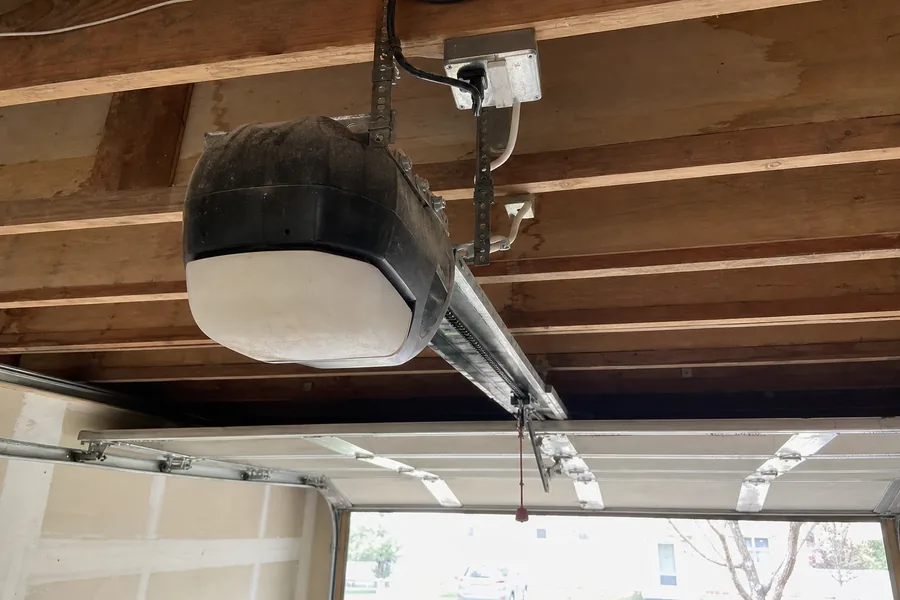
Openers also come in generations, and a remote built for one generation won't talk to another no matter how carefully it's set up. The generation is read off the motor unit itself, which is why the technician looks at the opener before choosing a remote from the truck.
That's also why a remote bought at the store because the package lists your brand doesn't always work: the brand is right and the generation is wrong.
Whatever turns up decides the job: a remote from the right family, a setting switched back, a memory that needs emptying, a different bulb, or a board. The technician carries parts for each and rules them out in that sequence.
Surges deserve a word here. Spring storms take out receiver boards every year, and the first sign is often an opener that runs from the wall control but ignores every remote in the house.
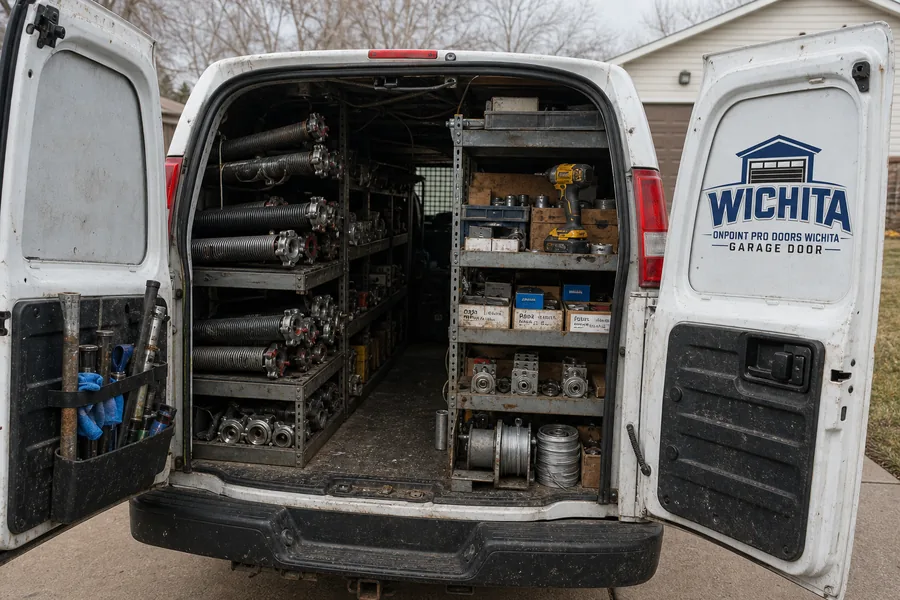
Every device in the house gets handled in one trip, step by step.
Cars built in the last couple of decades usually have three garage buttons on the visor, mirror or headliner. They copy a working remote, and on rolling-code openers they then need a second handshake at the opener to finish. Quick when you know the sequence, and it's done during the visit for each car you drive.
Some models, especially a few European makes, want the ignition on and take more than one attempt. That's normal for those cars and not a sign the opener is failing. Older pickups and farm trucks sometimes can't link to a new opener at all, and a small visor remote is the answer there.
A house that just changed hands still answers to every remote the last owners gave out and the keypad code they chose. The same goes after hail season, when roofers and siding crews were handed the code for a week. Clearing the opener's memory and setting it up fresh closes that gap.
Families moving in or out around the base know the routine: new house, new locks, new codes. The garage belongs on that list, and it's part of any programming visit across Sedgwick County.
Rentals and shared driveways are worth a mention too. A garage whose code has been handed to a string of tenants, dog walkers or cleaners is due for a fresh start, and it goes quickly once the technician is there.
LiftMaster and Chamberlain. Remotes and keypads for every generation still in service, universal remotes that span several, and parts for the older fixed-code units still hanging in some of the original east-side garages.
Genie. Intellicode remotes and keypads pair by a different routine than the LiftMaster family, and they're the ones most often returned to the store.
Linear, Marantec, Craftsman and the rest. The idea is the same and the parts differ. A phone photo of the sticker on the motor housing tells us which remote to bring.
Pairing takes moments when everything matches. The calls come when something doesn't: wrong generation, full memory, lock setting on, an LED bulb, a board hit by a surge. Finding which one is where the time goes, and that's far easier standing next to the opener.
It's also the visit where a remote that only half works gets its battery, its range and its pairing looked at together, instead of one guess at a time.
Estimates are free. You hear what's wrong and what it involves before any work starts, and you're free to say no.
"You need the old remote to add a new one." No. The opener accepts any compatible remote; the old one doesn't matter.
"Universal remotes can't handle rolling code." Today's cover every common generation. Only the oldest fixed-code openers sometimes stump them.
"If it won't pair, the opener is done." Seldom true. One of the causes above usually turns out to be it, and a failed receiver board gets repaired.
Yes, ideally with every remote and every car, so the whole household gets paired and tested at once. A car that's away can be added on a short follow-up.
That's range, not pairing: a tired battery, a bulb drowning out the receiver, or an antenna that's bent or tucked against metal. The technician checks all three.
Wi-Fi models will, and the app can be set up on the same visit. Remotes and the keypad keep working too; the app adds alerts and closing from anywhere on top.
That's normally lock mode. The technician releases it during the visit and looks for anything else switched on by mistake.
No, not anywhere in Sedgwick County. If a part is needed, you hear which one and why first.
Usually. These visits are short and the schedule makes room for them, early mornings included for people on plant shifts.
College Hill to Maize, a single call gets you a two-hour slot and a phone call when the technician heads over. No one attempts a diagnosis by phone.
Free estimate. Throughout Sedgwick County, including Riverside, College Hill, Delano, Derby, Andover, Haysville, Maize, Goddard, Park City.
Tell us which remote, keypad or car won't take, plus the opener's brand, and you'll get a slot to plan around. Visit and estimate: free in Sedgwick County.
Would rather call? Call (316) 749-2780.
List the remotes, the keypad and the cars. Estimates here are free.