
A garage door here has to take straight-line wind, hail and a hundred-degree afternoon, sometimes in the same week. The door that lasts is chosen for that, and sized to the opening it's going into. The estimate is free, and the first step is measuring.
Tell us what the door is doing. The estimate is free either way.
Out on the plains, the question isn't whether wind will lean on the door but how hard. A wind-rated door is built stiffer throughout: thicker steel in the sections, bracing across them, heavier hinges, and track bolted to take the push. For a wide door that faces west or open ground, it's the first choice to talk through. Full-view aluminum doors with glass or polycarbonate panes have a page of their own: glass garage doors. Carriage-house patterns in wood and wood-look steel are covered on our page for wood and carriage garage doors.
Exposure decides how much of that a door needs. A door tucked between the house and a neighbor's fence doesn't need what a door facing a field does, and you're told which yours is.
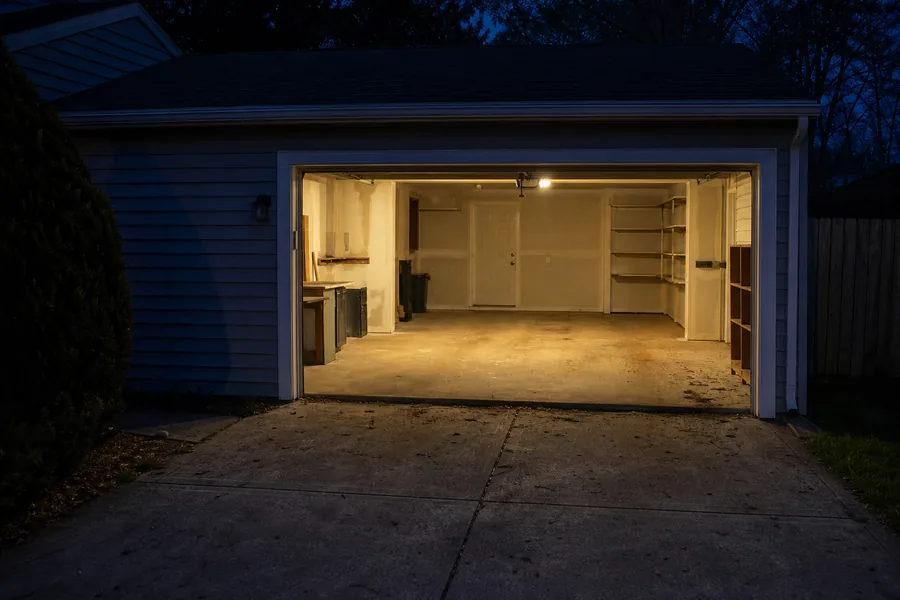
Hail is the other test. Single-layer steel dents easily; a door with an insulated core bonded to a thicker steel skin shrugs off small hail far better, and a wood-grain texture hides the dings that do happen. On doors facing the direction storms come from, it's worth the step up.
The same insulated door keeps the garage cooler on summer afternoons and warmer on January mornings, which the rooms next to it notice.
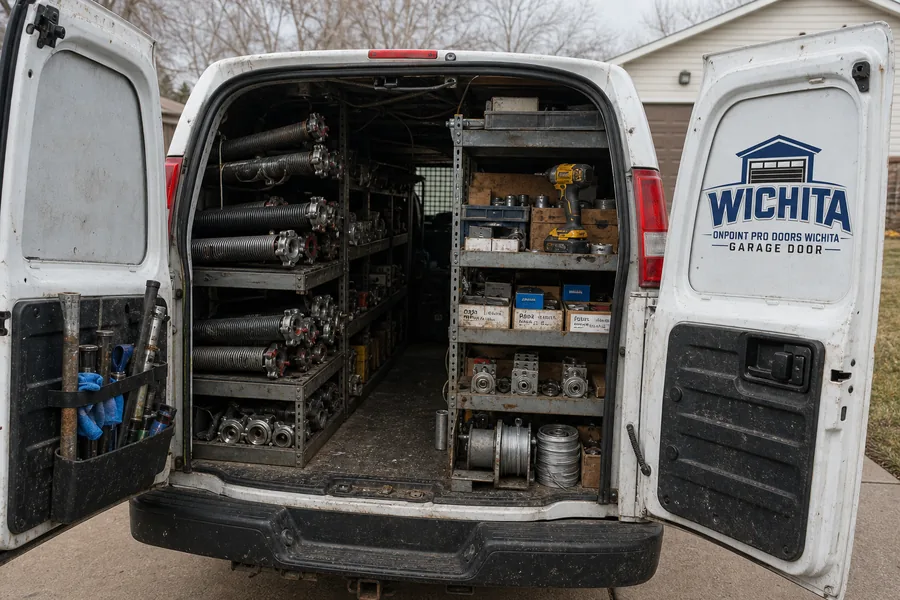
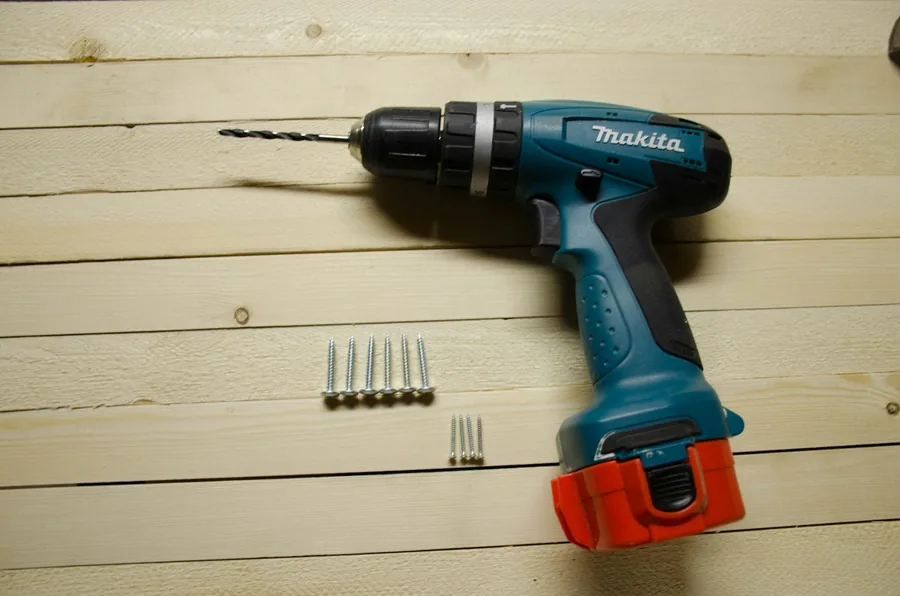
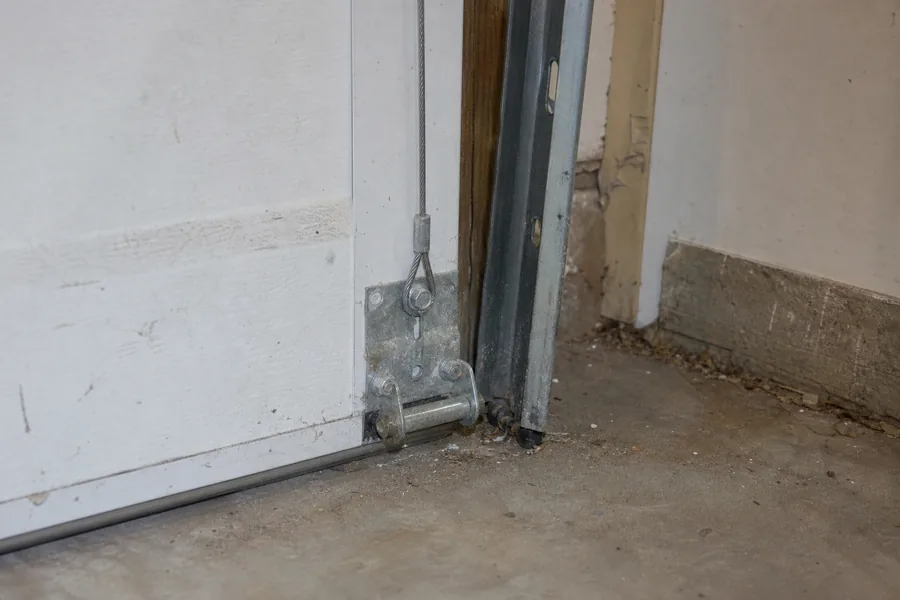
Most doors go in during a single visit.
The 1950s ranches on the east side often have a single door on an older opening, sometimes with extension springs along the ceiling. A new insulated single door on a torsion spring is a big change there: quieter, smoother and safer, with the spring on a shaft above the door instead of stretched beside the tracks.
If the opening has settled or the jambs have split, that's repaired first and listed separately, so the new door hangs square.
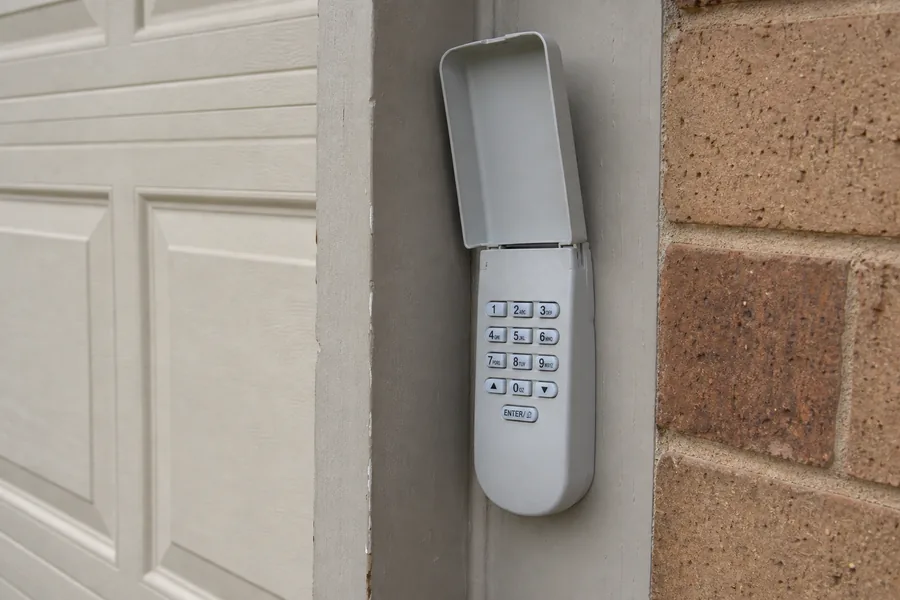
A wide insulated door with struts is heavier than the door it replaces, and an older opener may not lift it smoothly. Each opener is looked at against its new door; where a new one makes sense, a unit with battery backup is written up as a separate line, since storms here take the power out.
If the existing opener is up to it, its force and travel are reset for the new door and the safety reverse is tried before we leave.
Summer sun is hard on finishes. Lighter colors stay cooler and fade less noticeably; dark doors look sharp but soak up heat on a west-facing garage. Factory finishes on steel doors hold up far better than paint, and wood-grain textures hide dust and small dings.
Color charts and samples come to the estimate, so the choice is made in daylight against the house.
Many of the newer houses have a double door and a single side by side, and replacing them together keeps the panel lines, windows and color matched across the front. When only one is being replaced, the technician checks whether the other door's design is still made before anything is ordered.
Wide doors get their struts and springs sized at the factory for their weight and width, so the pair arrives ready to balance rather than being adjusted by guesswork on the driveway.
Single-door ranches in Riverside, College Hill and Crown Heights, larger homes in Eastborough and around Westlink, older homes in Delano, and new builds out in Derby, Andover, Haysville, Maize, Goddard and Park City.
Shop and small commercial doors too.
How exposed is the door? It sets the wind package.
Insulated core? Better against hail and heat.
Struts on a wide door? Usually, yes.
A new opener? Only if the old one can't lift the new door well.
Windows? Light for a garage that doubles as a workshop.
A door built stiffer to resist wind pushing on it: thicker steel, bracing, heavier hinges and track bolted for the load.
An insulated door with a thicker steel skin resists small hail much better than a single-layer door.
Yes, as part of a new door installation, if there's room above the opening.
One visit for most doors, once the door is here; the garage is closed up at the end of it.
Only if the old one can't lift the new door smoothly; that's judged at the estimate.
Yes. Window sections come in several layouts, and insulated glass keeps them from becoming cold spots in winter.
Yes, including wide doors for three-car garages.
If its design is still made, yes. If not, you hear the options before ordering, including doing both doors.
Usually far quieter: insulated sections, nylon rollers and a torsion spring take out most of the rattle an old door makes.
We take it down and haul it off.
Yes, measured and written up before you decide.
Arrange the measuring visit by phone or through the form; it's done at a time that suits you.
Free estimate across the county and the suburbs.
Describe the symptoms and you'll get an arrival window, not a guess. The visit and the estimate is free, anywhere in Sedgwick County.
Would rather call? Call (316) 749-2780.
Tell us what the door is doing. The estimate is free either way.