
On a lot of the older ranches the attached garage is the easiest way into the house, and after a break-in on the block the calls come in clusters. This is the list we go through with people: the habits worth keeping and the hardware we install.
Tell us what the door is doing. The estimate is free either way.
A garage door is rarely beaten by force. It's a handful of small openings lined up: an emergency release that can be reached, a keypad code that never changed, a remote in a car parked on the street, windows that show whether anyone's home, and an inside door left unlocked because it's inside.
On the plains there's one more: storm season. Outages mean the release gets used, and a door that was disconnected for a power cut and never reconnected is a door anyone can lift.
The list below closes those gaps. The habits are free, the hardware is a short visit, and the estimate is free.
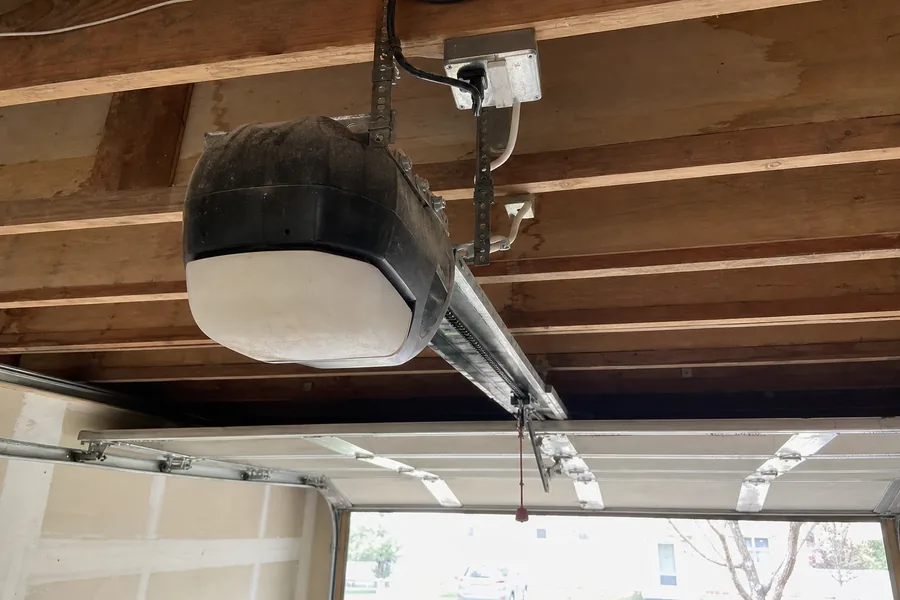
The red handle hanging from the opener rail disconnects the door so it can be moved by hand when the power goes out, which on the plains means every storm season. It has to stay. The trouble is that on some doors it can be reached from outside.
A release shield solves that. It covers the trolley so the release can't be reached from outside, and it changes nothing about pulling the cord from inside during an outage. It's one of the most common things we add after a break-in nearby. The technician confirms it suits your trolley before it goes on.
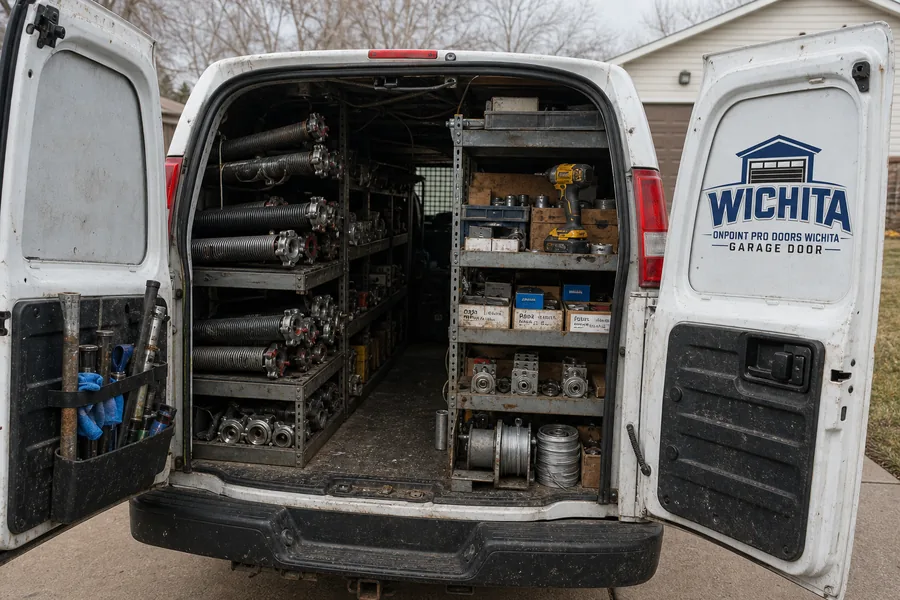
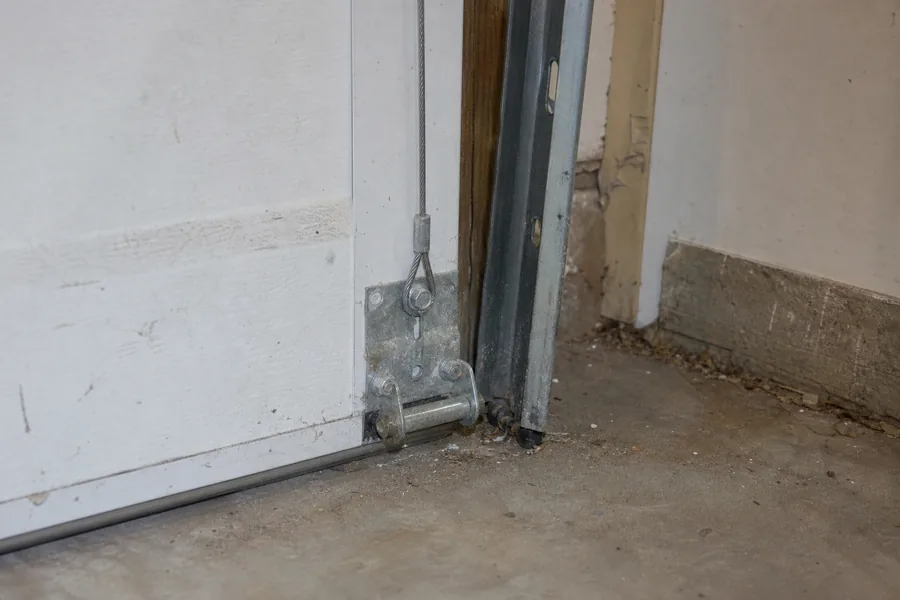
Habits first, then the hardware we put in.
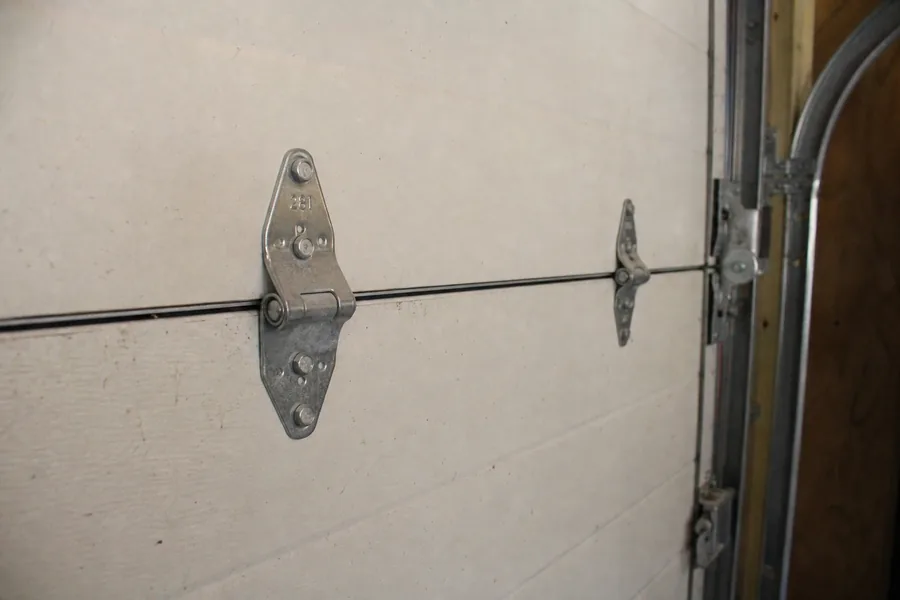
Since the late nineties, openers have used rolling code: every click of the remote sends a fresh signal that never repeats. Fixed-code units, the generation before, repeat one signal forever, which is what makes them copyable. If yours is from before the switch, retiring it beats every other item on this page.
Lots of the original openers in east-side garages date from before that switch. On any visit the technician reads the type off the motor housing and tells you what a newer one would involve, with a free estimate.
Keypads age too. A keypad whose most-used buttons have worn shiny shows anyone looking which digits are in the code. A new keypad with a fresh code solves both problems at once.
The pre-trip routine: lock mode on, track bolt in, remotes brought inside, the kitchen door deadbolted, phone notifications on, and someone next door who knows the dates. A few minutes, and most easy ways in are closed.
Once you're home, pull the bolt first; an opener that fights a pinned door can chew up its gears.
Release shields, track bolts, a deadbolted house door, windowless sections, phone-connected openers or add-on modules, and a rolling-code opener where a fixed-code one still hangs. All routine, and usually one trip.
For acreage homes with a pole barn or a detached shop, the same list applies to every overhead door on the place, and the shop door is often the weakest one on the property.
You won't find break-in methods described here; the protections above are what count.
"Closed means secure." Only if the cord is out of reach, the remote isn't sitting in the car and the kitchen door is locked.
"Smart openers invite trouble." The opposite, with a strong password: your phone tells you the second the door moves.
"The side door is an afterthought." To a burglar it's often the first choice, precisely because nobody reinforced it.
No. The shield only stops the release being reached from outside; in the garage, the red cord still hangs within reach and frees the door as before.
If it's fixed-code, we'd suggest a newer opener. If it already uses rolling code, it can keep working. The technician can tell by looking at the motor housing.
On most sectional doors, yes; it sits in the track, and the opener's settings are adjusted so it never strains against the bolt.
Seen from the street it passes for frosted glass, and light still gets in. Or a solid section can go in where the windows are, finished to match.
No. Anywhere in Sedgwick County the estimate is free; you hear what we'd suggest and why, and saying no ends it there.
Most days, yes. These jobs are quick, and a recent break-in nearby moves them forward.
Eastborough to Haysville, a single call puts you in a two-hour slot, and the technician phones before setting off. Nobody sizes up a door by phone.
Free estimate. Throughout Sedgwick County, including Riverside, College Hill, Delano, Derby, Andover, Haysville, Maize, Goddard, Park City.
Tell us what's bothering you about the garage and we'll give you a slot to plan around. Visit and estimate: free anywhere in Sedgwick County.
Would rather call? Call (316) 749-2780.
Opener age, plus any side door into the garage. Estimates here are free.