
Most new-opener calls around here start with the same question: belt or chain? Here is what each drive does, where the quiet belt earns its keep, and why the door gets checked before any opener goes up.
Tell us what the door is doing. The estimate is free either way.
Residential openers all work the same way: a motor near the back wall pulls a trolley along a rail, and an arm connects the trolley to the top of the door. The drive is what moves the trolley: a chain like a bicycle's, a rubber belt with steel cords inside, a threaded screw, or on wall-mounted units, the spring shaft itself.
What we find on installs here: chain drives on most older garages, belts on most newer builds and recent replacements, and wall-mounted units where storage racks or a car lift leave no room overhead.
On the wide doors out west, the opener arm pulls on the top section every trip and the wind works the same spot. A reinforcing strut across that section and a properly braced arm bracket are part of a new-opener install whenever the door needs them, because no opener can make up for a top section that has started to crack.
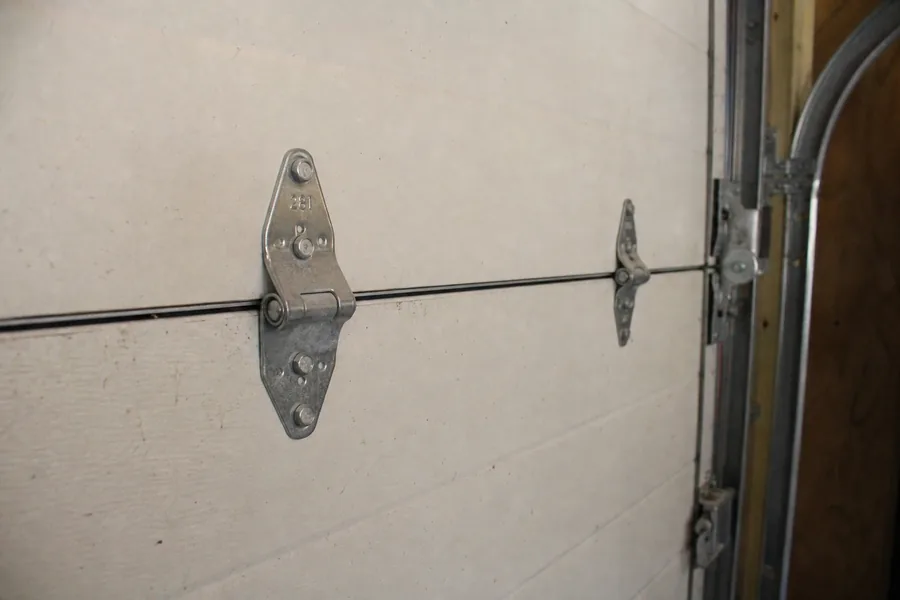
For a detached garage out back, a chain drive is still a fine choice. For an attached garage, especially a wide double with rooms beside it, we usually suggest a belt.
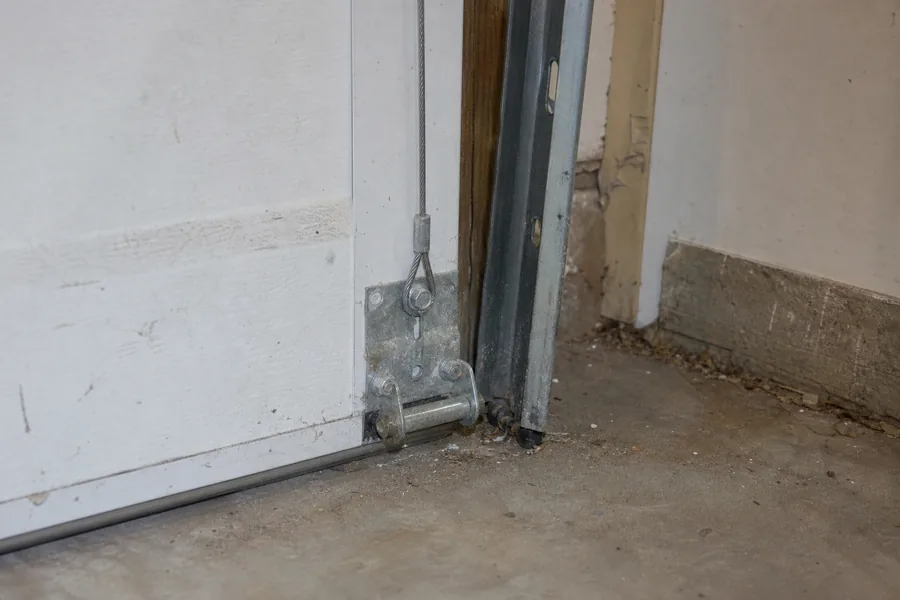
The older single doors on the east side are lighter, and many hang on extension springs. A belt drive suits them too, but the springs and the safety cables that should run through them get looked at first, since an opener doesn't care how a door is balanced until it starts to strain.
The same order on every new opener.
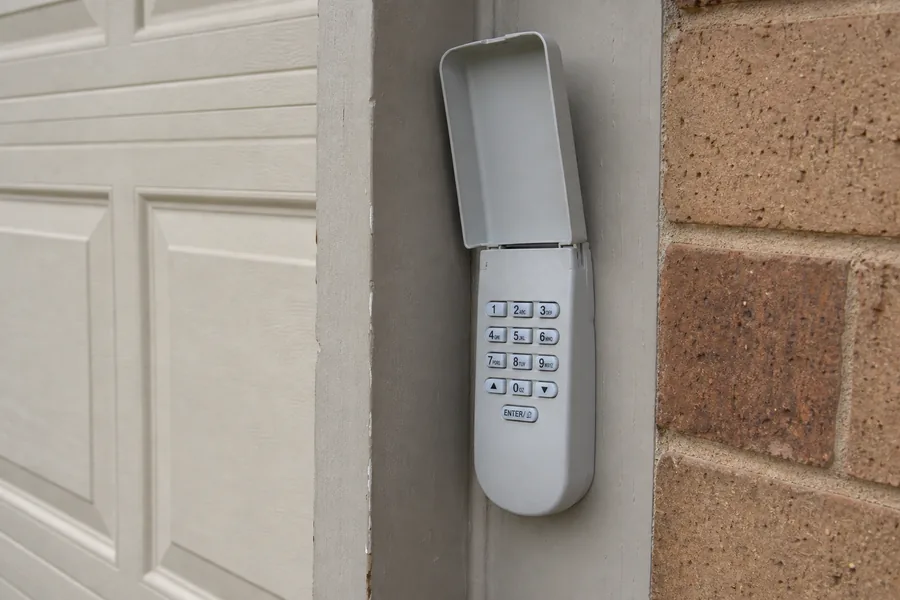
LiftMaster, Chamberlain and Genie now build Wi-Fi into most of their range: your phone shows whether the door is open, the door can shut itself if it's left up, and you get a message whenever it moves. Some models add a camera or in-garage package delivery.
The alert is the feature people end up using most. A message that the door has been open for an hour beats finding out after dark with the wind blowing leaves and dust across the floor.
Battery backup is the extra we recommend most here. Spring storms and ice take the power out, and that's exactly when the car needs to get out of the garage. A backup unit keeps the opener running for a number of trips during an outage.
Storm season also brings surges. A surge protector at the outlet the opener plugs into is a small add-on that saves boards, and it's worth asking about on any install.
The names that come up most are the LiftMaster belt drives with battery backup and Wi-Fi, and the quieter Genie belt models. They're good openers. What decides how long they last is the door they're hung on.
Horsepower ratings are mostly marketing. A half-horsepower-class unit lifts a balanced single door for years; the three-quarter class suits heavy doubles and insulated doors. A bigger motor on an unbalanced door just strains for longer.
Screw drives still turn up in some older garages. They work, but they're loud and sluggish in the cold, and parts for the older ones are getting hard to find, so they're usually replaced with a belt or chain unit rather than rebuilt.
Many of the new-opener calls we get across Sedgwick County end without a new opener. The old unit struggles because a spring has weakened, a cable is fraying or hail kinked a section until the door binds. Fix the door and the old opener often carries on.
Dust plays a part as well. Fine dirt blows into every garage on a windy day, settles into the grease on rollers and hinges, and turns it into grit that makes the door drag. A door that has dragged for a season makes any opener look weak.
Estimates are free. You're told what the door needs and which opener suits it before anything is decided, and no is always an option.
"Belts can't lift heavy doors." Today's belts carry steel reinforcement and are rated for insulated doubles. The spring sets the limit, not the belt.
"More horsepower fixes a struggling opener." Struggling means the door is out of balance. A stronger motor only takes longer to burn out.
"Smart openers need a subscription." The basic apps on the major brands are free. Paid plans add things like video storage.
"The old rail can stay." Rarely between brands and not often within one. New openers ship with their own rail, and the complete assembly goes up together.
Noticeably, especially in the room above or beside the garage. Chains make the rail rattle; belts hum. The west-side doubles with bedrooms over the garage notice it most.
Almost always, once the door is balanced. Springs and hardware get looked at first, since an opener should only ever run a door that lifts easily by hand.
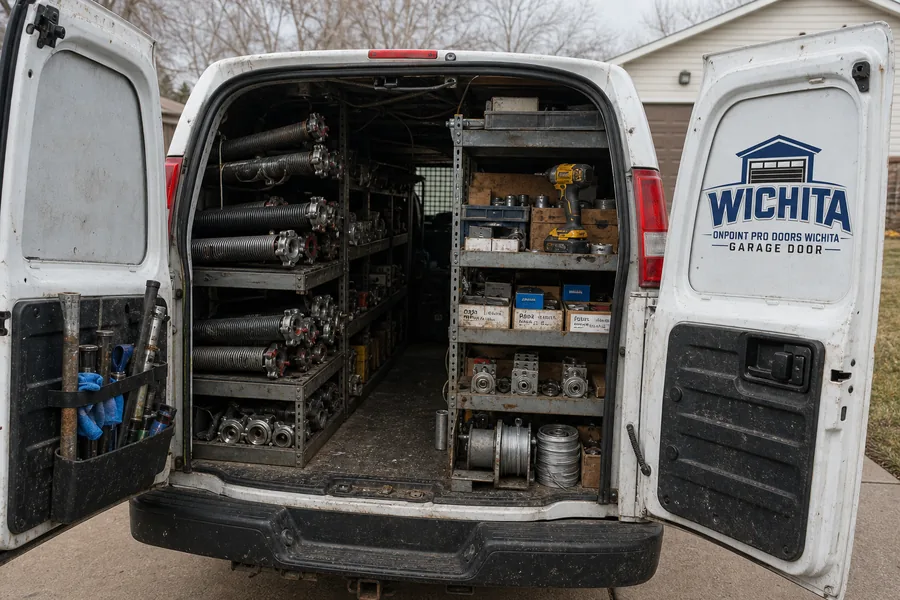
Most of an afternoon, with every remote and car set up and the safety reverse tested. If the door needs a spring or a cable first, that happens on the same visit whenever the part is on the truck.
A wall-mounted unit hangs beside the door on the torsion bar and leaves the ceiling clear for storage or a lift. It needs torsion springs to work, which most newer doubles already have. Shop doors on acreage properties are a common place for them too.
Yes, anywhere in Sedgwick County. You're told what the door needs and which opener suits it before anything is decided.
Often. A dead opener with the car inside is treated as urgent. Early-shift calls get the earliest window we have, and a door stuck partway open should be mentioned too.
Westlink to Park City, one call sets a two-hour slot, with a phone call before the technician drives over. Nobody guesses at the door by phone.
Free estimate. Throughout Sedgwick County, including Riverside, College Hill, Delano, Derby, Andover, Haysville, Maize, Goddard, Park City.
Tell us what the old one is doing and you'll get a slot to plan around. Visit and estimate: free in Sedgwick County.
Would rather call? Call (316) 749-2780.
Brand, age and what it's doing now. Estimates here are free.