
Openers here fight two things most of the year: wind leaning on the door and storms hitting the power. Most of what goes wrong is a part, a setting or a sensor, not the whole unit. When it really is time for a new one, you hear why before anything is ordered. The estimate is free.
Tell us what the door is doing. The estimate is free either way.
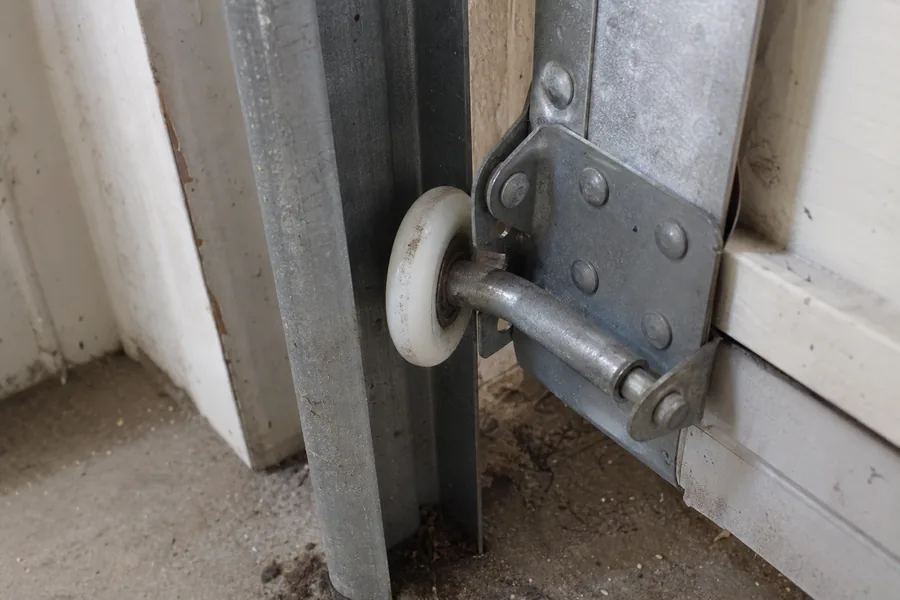
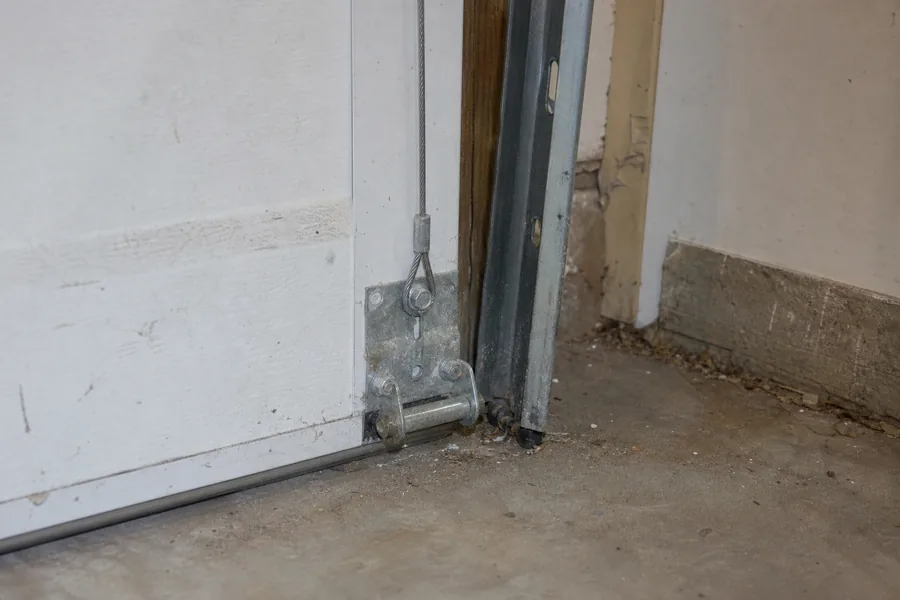
A garage door is a big flat sail. When a strong south wind pushes on a closing door, the opener feels the extra resistance and does exactly what it's built to do: it stops and backs up, as if something were in the way. People assume the opener has gone bad. More often the force was set on a calm day, or the door has a bent section or tired rollers that make it bind the moment wind loads it. For alerts and control from your phone, see smart garage door openers.
The answer is rarely more force; a door that can't be stopped is the dangerous kind. It's getting the door to run freely again, then setting the limits and force for real conditions. Wide two-car doors on open lots sometimes need a reinforcing strut across the top section, and that's named on the estimate when it applies.
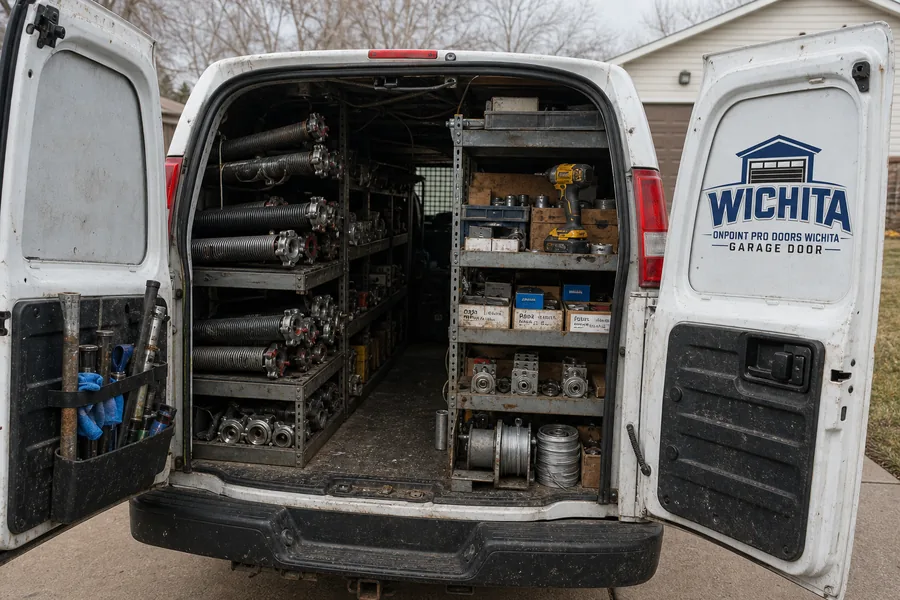
Spring storms bring the other common call: the power flickers during a hailstorm, comes back, and the opener is dark or ignores the remotes. The logic board is the usual casualty, and replacement boards for the big three brands come on the truck. A plug-in surge protector is a small add-on that keeps the new board safe from the next storm.
Hail and wind also knock the photo eyes out of line or pile debris in front of them. When the door starts down and reverses with the light flashing, the eyes are the first suspect, and aligning them or rerunning a damaged wire is quick work.
Many of the newer subdivisions have three-car garages with two openers, high ceilings and storage racks overhead. Those setups bring their own questions: whether a wall-mounted unit beside the door makes sense to keep the ceiling free, how to pair both doors and every car without one remote opening the wrong bay, and whether the Wi-Fi reaches the far end of the garage. When we install, those get settled on site rather than discovered later.
A new opener install includes taking down and hauling away the old unit, balancing the door before the new one ever runs, setting travel and force, mounting and aligning the eyes, and pairing each remote, the keypad and the buttons built into your cars.
In the order that finds the real problem fastest.
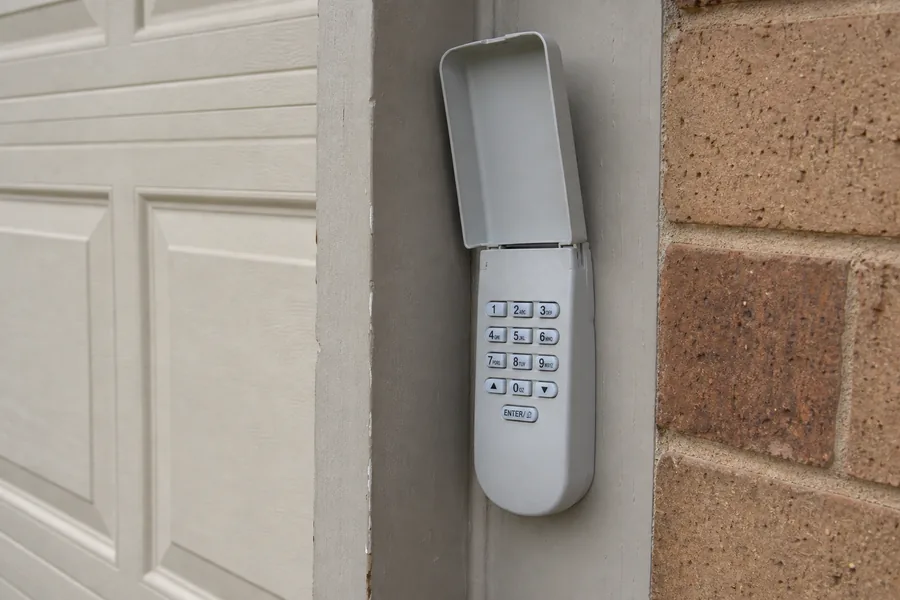
Outdoor keypads take a beating from sun, hail and cold. A keypad that answers some days and ignores you on others usually needs a battery or has moisture inside, and a new one pairs in a few minutes. Remotes that only work up close point at a weak battery, the receiver, or a bright LED bulb in the opener's light socket smothering the signal.
Some of the older ranches still run chain-drive openers whose remotes are coded with a bank of little on-off switches. Those can be repaired, but that kind of code can be copied, and you'll hear that plainly along with what a current opener would change.
Across the city from Riverside and College Hill to Delano, Crown Heights, Eastborough and Westlink, and out to Bel Aire, Maize, Park City, Goddard, Haysville, Derby and Andover. Parts for the common brands ride along.
Say where you are and you get a two-hour window.
A reversing door is usually the door or the eyes. Rarely the motor.
More force isn't a fix. It hides the problem and removes the safety margin.
Storm damage is usually one board. That's a part, not a reason for a new unit.
Old switch-code remotes are a security gap. Worth replacing on that ground alone.
Wind pressure is making the opener think something's in the way. The door is checked for binding and bent sections, then force and limits are set properly; wide doors may need a strut.
A surge through the outlet is the usual cause, and the circuit board is what takes it. We carry replacement boards for the common brands and can add a surge protector on the same visit.
Yes. Rail length, ceiling height and storage racks decide between a rail unit and a wall-mounted one, and both doors are programmed so they don't interfere.
Often the battery or moisture inside it. A replacement keypad pairs quickly, and the code is set to something new.
Yes. When we install a new one, the old unit and its hardware leave with us.
Yes, and it's written down before any work begins.
Call or use the form, say what the door is doing, and you get a two-hour window plus a heads-up call once the technician is rolling. Early-morning and evening slots go first to anyone whose car is stuck inside.
The estimate is free anywhere in the county and the towns around it.
Describe the symptoms and you'll get an arrival window, not a guess. The visit and the estimate is free, anywhere in Sedgwick County.
Would rather call? Call (316) 749-2780.
Tell us what the door is doing. The estimate is free either way.